what they built
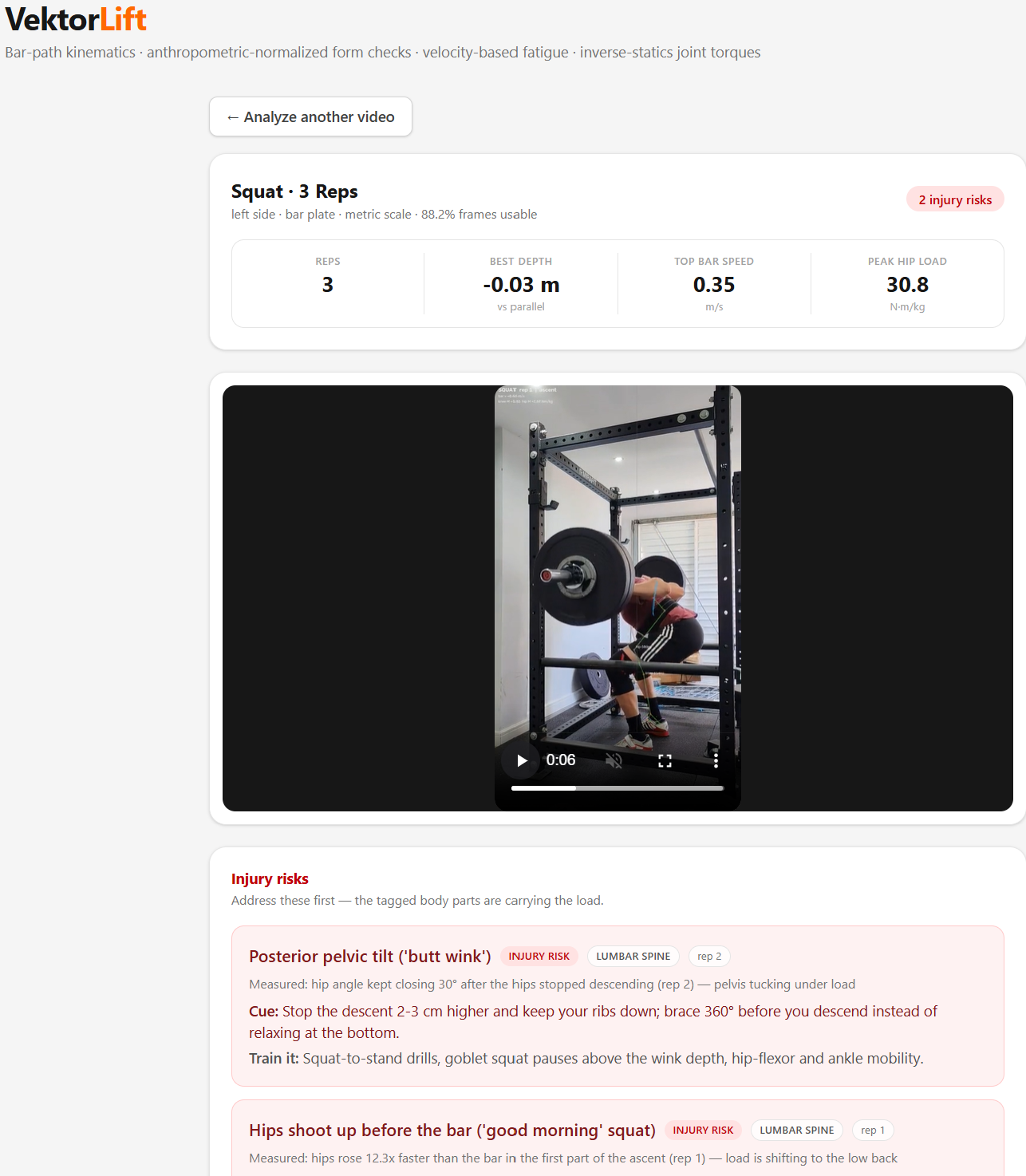
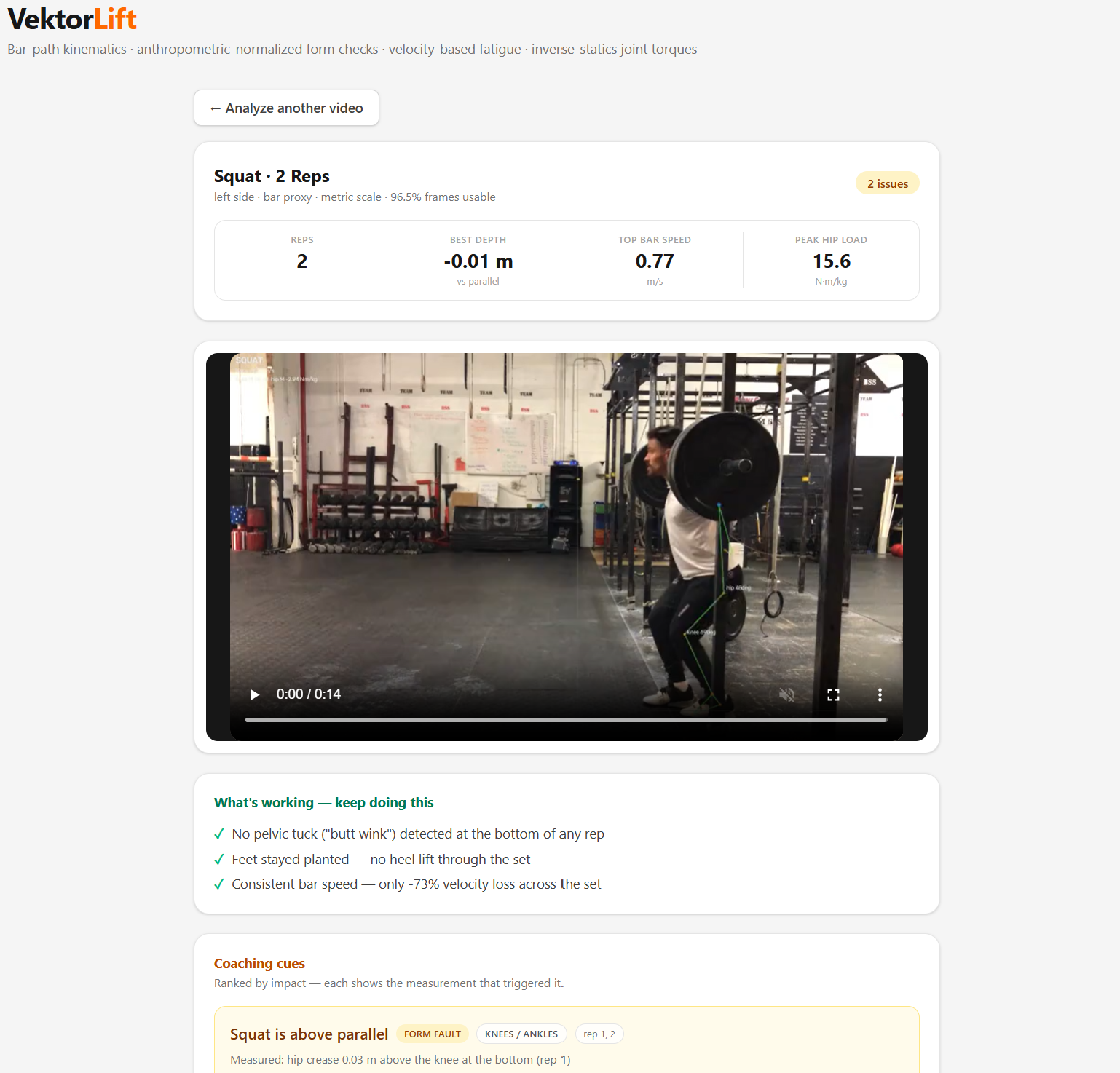
I built VektorLift after dealing with persistent lower back pain from heavy squats and deadlifts. Generic advice told me to stay upright, but with my longer femurs, forcing an artificial posture threw extra shear force straight into my lumbar spine. Most computer vision fitness apps make the exact same mistake. They act as crude rep counters with rigid, one-size-fits-all angle rules that ignore individual body proportions entirely. I wanted a tool that catches real injury risks before they sideline you, calibrated to how your body is actually built. VektorLift turns a phone video into an automated biomechanics checkup. Using MediaPipe, OpenCV, and de Leva anthropometric models, it extracts your skeleton and scales acceptable trunk lean to your femur-to-torso ratio. From there, an inverse statics engine calculates net joint moments at the ankle, knee, hip, and L5/S1 spine, while tracking bar velocity to catch fatigue before your form degrades. A rule engine checks for 15 specific faults like butt wink, good-morning shifts, and bar drift, highlighting the exact joints under stress and offering drills to fix them. The stack runs on a Python and FastAPI backend using NumPy, SciPy, and Savitzky-Golay filtering to clean up noisy gym footage, with a React, TypeScript, Tailwind, and Recharts frontend. Users get an interactive report and an annotated replay showing their skeleton, bar path, and joint torque readouts. What separates VektorLift from standard form checkers is real physics: instead of judging you against an imaginary ideal body, it uses your actual bone levers to keep your spine safe and your lifts productive.
team GymRats
- Boen Liu
submitted Oct 24, 3:32 PM