what they built
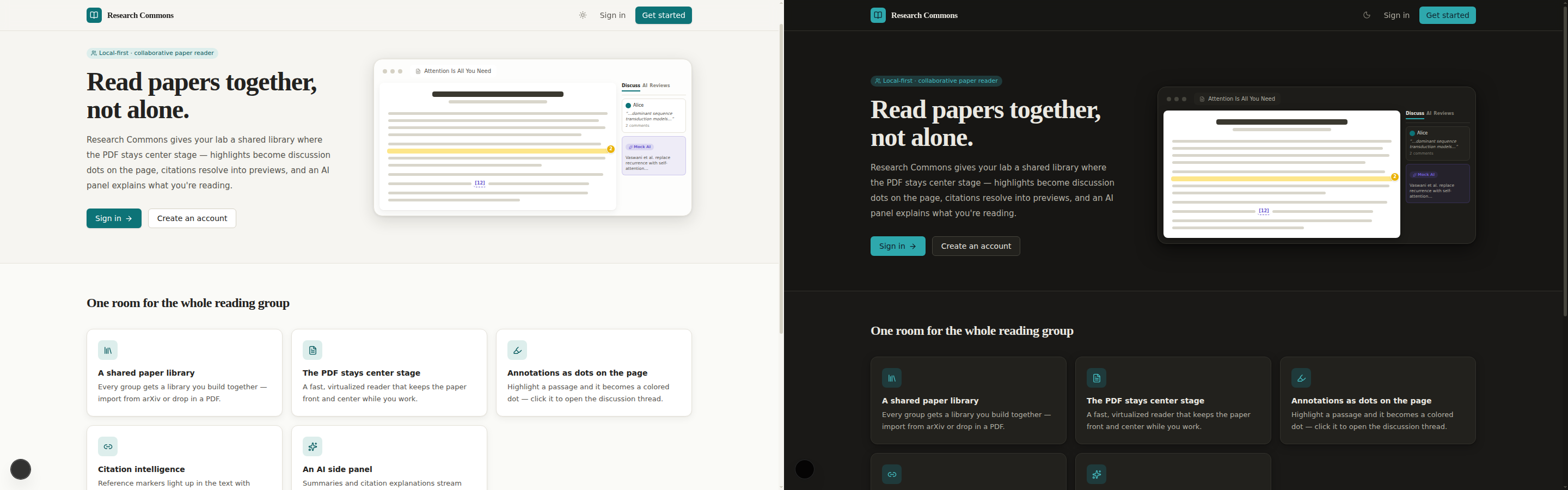
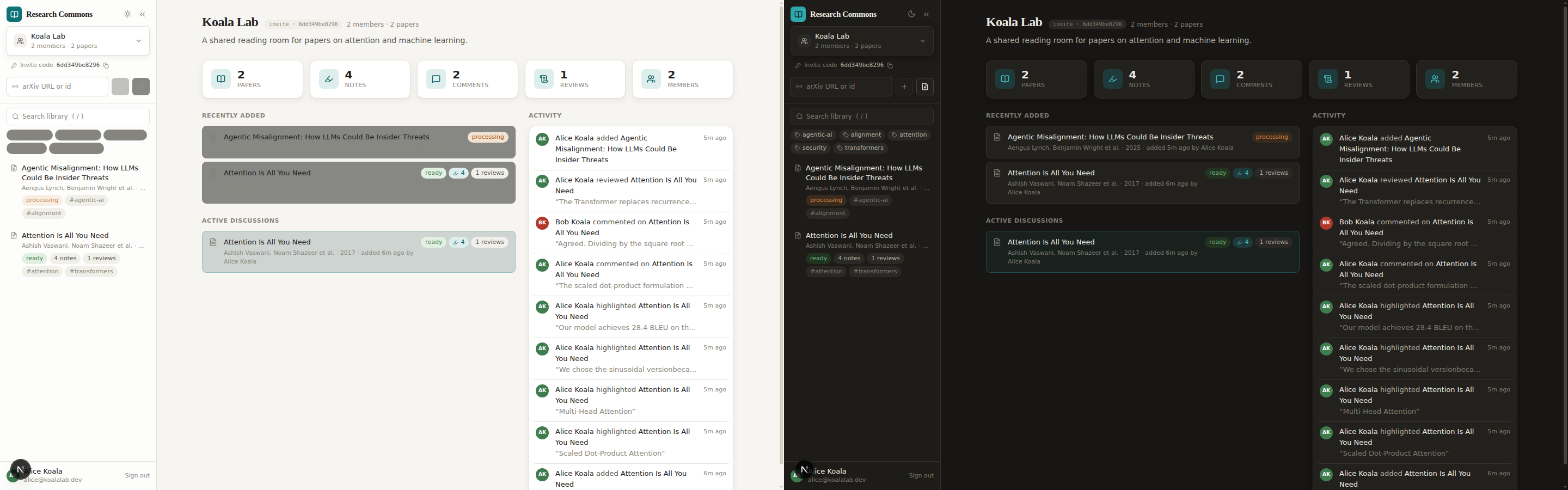
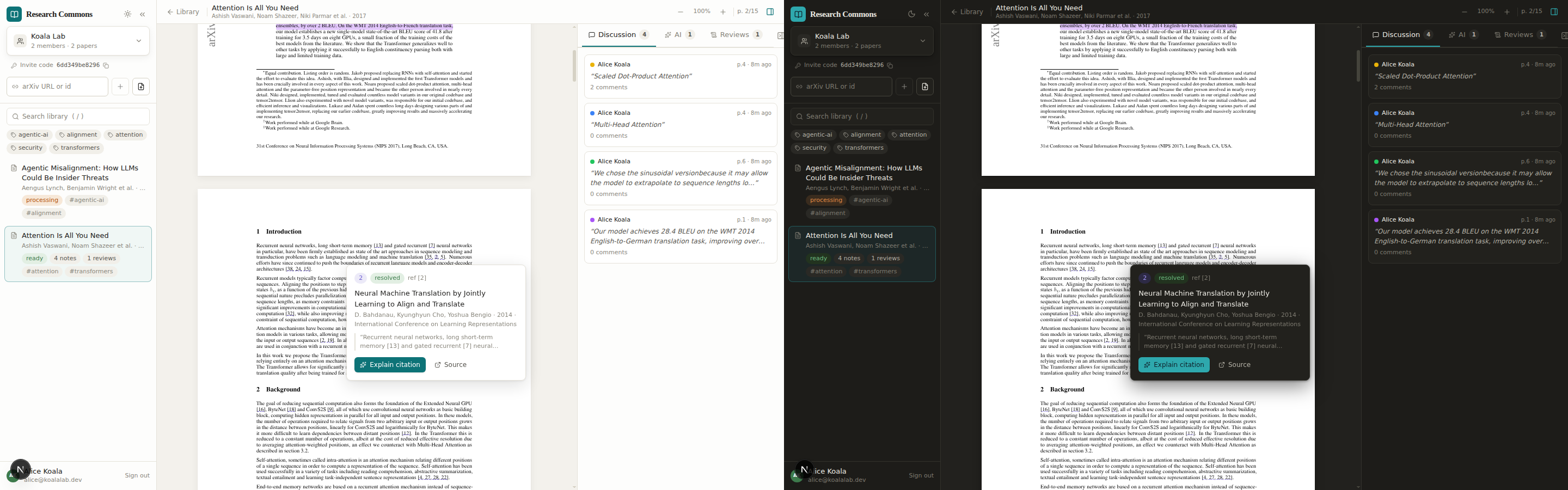
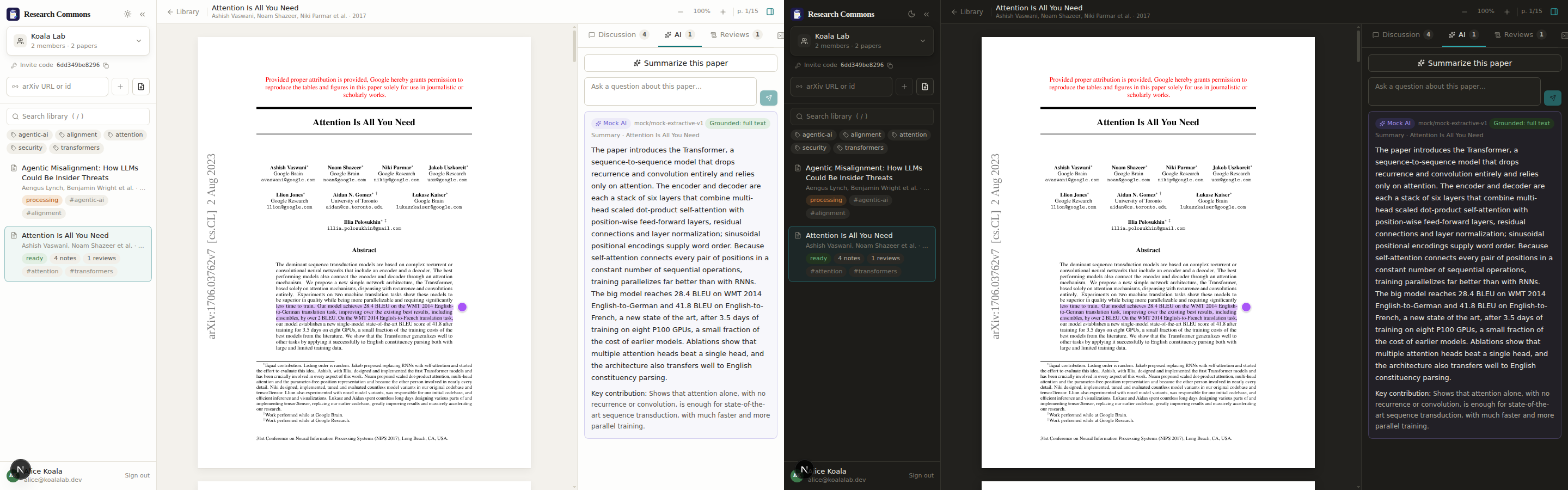
THE PROBLEM Research is drowning in papers. Over 60,000 abstracts were registered for ICLR 2027; for context this is more submissions than the past decade combined. Peer review is buckling: submission caps, lotteries, overloaded reviewers, AI-written reviews. If experts can't keep up, what chance does a first-year PhD student have? So we skim abstracts, outsource reading to chatbots, and move on. Careful paper reading (following an argument, checking citations, questioning claims) is quietly dying. As AI agents take over more of the building, that "thinking" matters more, and it has to stay human. Meanwhile, insight is scattered: labs discuss papers across Discord, Slack, Teams, X and Bluesky, but none of it stays attached to the paper, so every student re-reads the same papers alone, all labs do the same work and collaboration seem to reduce heavily. THE IDEA Research Commons makes reading social again. A lab, class or reading group reads papers together, and every highlight, question, disagreement and review becomes a shared layer on the paper itself. The next reader starts from the group's understanding, not from zero. AI helps you read; it doesn't read for you. WHY NOT JUST ANOTHER PDF ANNOTATOR Annotators, reference managers and chatbots already exist. We didn't invent highlighting. We built for how researchers actually work: reading as a group, arguing over claims, following citations. AI is embedded to aid literature review, not replace it. A simple idea that solves a problem every lab feels. WHAT IT DOES 1. Read together: teammates' highlights appear live as dots on the PDF. See what your lab found important and know where to focus. 2. Discuss and disagree: threads on any passage, so claims get debated where they're made. Literature review is learned by arguing, and that's the human part. 3. Shared and private: post to the group, or keep notes private (enforced by the database, not just hidden). 4. Reviews: structured TL;DR, strengths, weaknesses and open questions tell you in two minutes if a paper deserves two hours. 5. Followable citations: click [2] to preview the cited work and why it's cited there. Citations are a field's map; following them in place keeps you on track. Uncertain matches stay labelled, never invented. 6. AI that keeps you reading: summaries, citation explanations and Ask AI quote the paper with page links, and admit when the paper doesn't answer. 7. Lab feed: see what your group is reading and debating. Your peers' attention is the best filter. HOW WE BUILT IT DEVIN is an absolute beast!! It created the whole prototype using Next.js + TypeScript, PDF.js, and Supabase (Postgres with row-level security, Auth, Realtime), all local in Docker at zero cost. Swappable AI (mock by default; Gemini/Ollama ready). The citation pipeline is tested on 5 real arXiv papers. Every change went through review, CI and a recorded two-user test. DEMO Koala Lab at Georgia Tech: Alice and Bob reading and arguing about "Attention Is All You Need" and "Agentic Misalignment". WHAT'S NEXT "Learn to read a paper" coaching, cross-paper research memory, and public reading circles. Long term: a lab's public reading becomes a window into what it cares about. Students could see how a lab thinks before emailing, researchers could get richer feedback from close readers, and a field could see where its attention is going. Research will be collaborative again. Peer review won't disappear, but it shouldn't be the only place careful reading happens.
team VibeResearchers
- Shreeyash Gowaikar
submitted Oct 24, 4:35 PM